


July 31, 2013
While the rule of law is far from perfect in Russia, in China it remains a foreign concept.
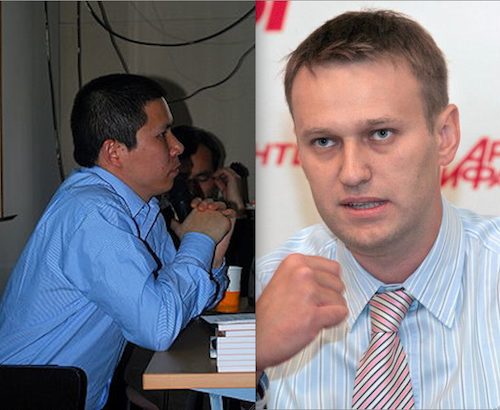
Human rights lawyer Xu Zhiyong and Russian opposition leader Alexei Navalny. Photos via Wikipedia and Facebook.
It seems that all authoritarian governments like to use similar accusations to thwart their opponents. For starters, there was the oil oligarch Mikhail Hodorkovsky, one of the richest and most influential figures in Russian society: Charged with economic crimes, he was arrested in 2003 and sentenced to nine years in prison, until that sentence was extended another five years to 2017. His long imprisonment has leveled President Vladimir Putin’s road to the presidency.
Now Putin has another “economic criminal” in Alexei Navalny. The 37-year-old lawyer and blogger is a Russian opposition leader and one of the most important street protesters and anti-corruption advocates in the country. After calling Putin a “toad” and the ruling United Russia party “a party of crooks and thieves” Navalny received a heavy punishment: Five years in prison.
The official accusation against him was embezzlement. Before the charges, Navalny had intended to challenge the incumbent mayor of Moscow, Sergey Sobjanin-Putin’s confidante—by running in the mayoral election in September. If he went to jail, he’d be out of the running. However, before Navalny could be sent to prison, a miracle occurred: One day after his July 18 conviction, he was released unexpectedly. Subsequently, he was celebrated as a hero and will be a candidate in the election on September 9. Is this a political midsummer night’s dream? Is it evidence that there is rule of law in this post-socialist country?
China’s similar, though more authoritarian, government also prefers to accuse dissidents of economic missteps. Government officials accuse them, for example, of tax fraud, such as we’ve seen in the cases of the artist Ai Weiwei, the journalist Du Bin, and many others.
For detail please visit here