
JAN. 16, 2015
HONG KONG — A Chinese government official I know was put under shuanggui, the secretive system of internal Communist Party investigation in which victims are detained, questioned without counsel and sometimes tortured. Continue reading
JAN. 16, 2015
HONG KONG — A Chinese government official I know was put under shuanggui, the secretive system of internal Communist Party investigation in which victims are detained, questioned without counsel and sometimes tortured. Continue reading
Murong Xuecun:Xi’s Selective Punishment已关闭评论
Posted in Headlines, Murong Xuecun
Tagged MURONG XUECUN
By AMY QIN January 27, 2015
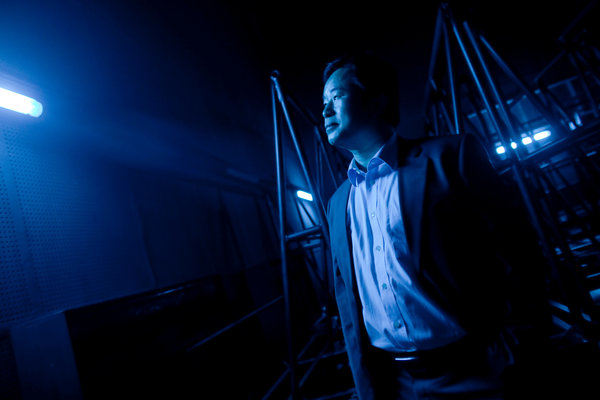 Hao Qun, known to most readers as Murong Xuecun, is one of many prominent Chinese writers to use a pen name.
Shiho Fukada for The New York Times
Zhou Shuren is widely regarded as one of China’s most influential Continue reading
China to Force Authors to Provide Real Names When Publishing Online已关闭评论
Posted in Press Freedom
Tagged Real Names
JULY 1, 2013
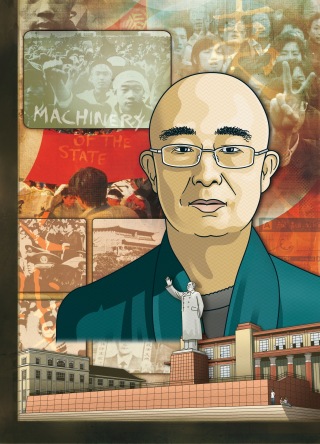
Liao Yiwu was imprisoned from 1990 to 1994, after reciting a poem, “Massacre,” in memory of dead pro-democracy protesters.
CREDIT ILLUSTRATION BY PETER AND MARIA HOEY
Spending time in jail is no fun anywhere, but each society has its own cultural refinements of misery. The sadistic imagination of Chinese prison authorities, though hardly unique, is often remarkable. But so is that of the inmates themselves, who form their own hierarchies, their own prisons within prisons.
At the Chongqing Municipal Public Security Bureau Investigation Center, for example, also known as the Song Mountain Investigation Center, the cell bosses devised an exotic menu of torments. A few samples:
SICHUAN-STYLE SMOKED DUCK: The enforcer burns the inmate’s pubic hair, pulls back his foreskin and blackens the head of the penis with fire.
Or:
NOODLES IN A CLEAR BROTH: Strings of toilet papers are soaked in a bowl of urine, and the inmate is forced to eat the toilet paper and drink the urine.
Or:
TURTLE SHELL AND PORK SKIN SOUP: The enforcer smacks the inmate’s knee caps until they are bruised and swollen like turtle shells. Walking is impossible.
There are other tortures, too, meted out in a more improvised manner. Liao Yiwu, in his extraordinary prison memoir, “For a Song and a Hundred Songs” (translated from the Chinese by Wenguang Huang; New Harvest), describes the case of a schizophrenic woodcutter who had axed his own wife, because she was so emaciated that he took her for a bundle of wood. The cell boss spikes the woodcutter’s broth with a laxative, and then refuses to let him use the communal toilet bucket, with the result that the desperate man shits all over a fellow-inmate. As a punishment for this disgusting transgression, his face is smashed into a basin. The guards, assuming that he has tried to commit suicide, a prison offense, then work him over with a stun baton.
Alexis de Tocqueville came to the United States in 1831 to study the country’s prison system, and ended up writing “Democracy in America.” Observing the Chinese prison system from the inside, from 1990 to 1994, as a “counterrevolutionary” inmate, Liao Yiwu tells us a great deal about Chinese society, both traditional and Communist, including the impact of revolutionary rhetoric, forced denunciations and public confessions, and, as times have changed since Mao’s misrule, criminal forms of capitalism. He ends his account by saying that “China remains a prison of the mind: prosperity without liberty.”
Liao was incarcerated for writing a poem, “Massacre”—a long stream-of-consciousness memorial to the thousands of people who were killed on June 4, 1989, when the pro-democracy movement was crushed throughout China. The poem, in its English translation by Michael Day, begins as follows:
Prison of the Mind-A Chinese poet’s memoir of incarceration已关闭评论
Posted in Book Reviews
Tagged Liao Yiwu
By CHRIS BUCKLEY and ALAN WONG JANUARY 23, 2015 7:01 AM January 23, 2015 7:01 am
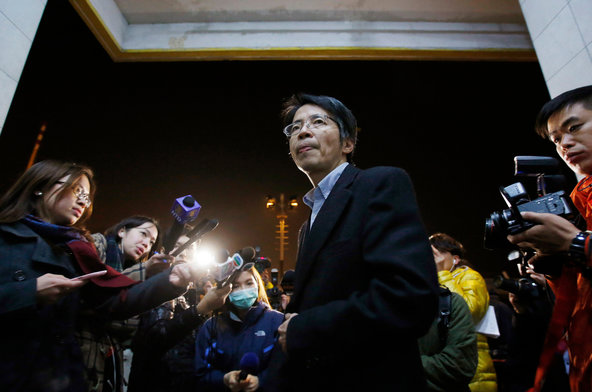 Kevin Lau Chun-to in January 2014, after his dismissal as editor of the Hong Kong newspaper Ming Pao.Credit Associated Press
Since the newspaper editor Kevin Lau Chun-to was attacked with a cleaver last year and left bleeding on a Hong Kong street, he has embodied fears that the city’s long Continue reading
Hong Kong Editor, Attacked Last Year, Expresses Hope for Future of News Media已关闭评论
Posted in Headlines, Hong Kong Democracy, Press Freedom
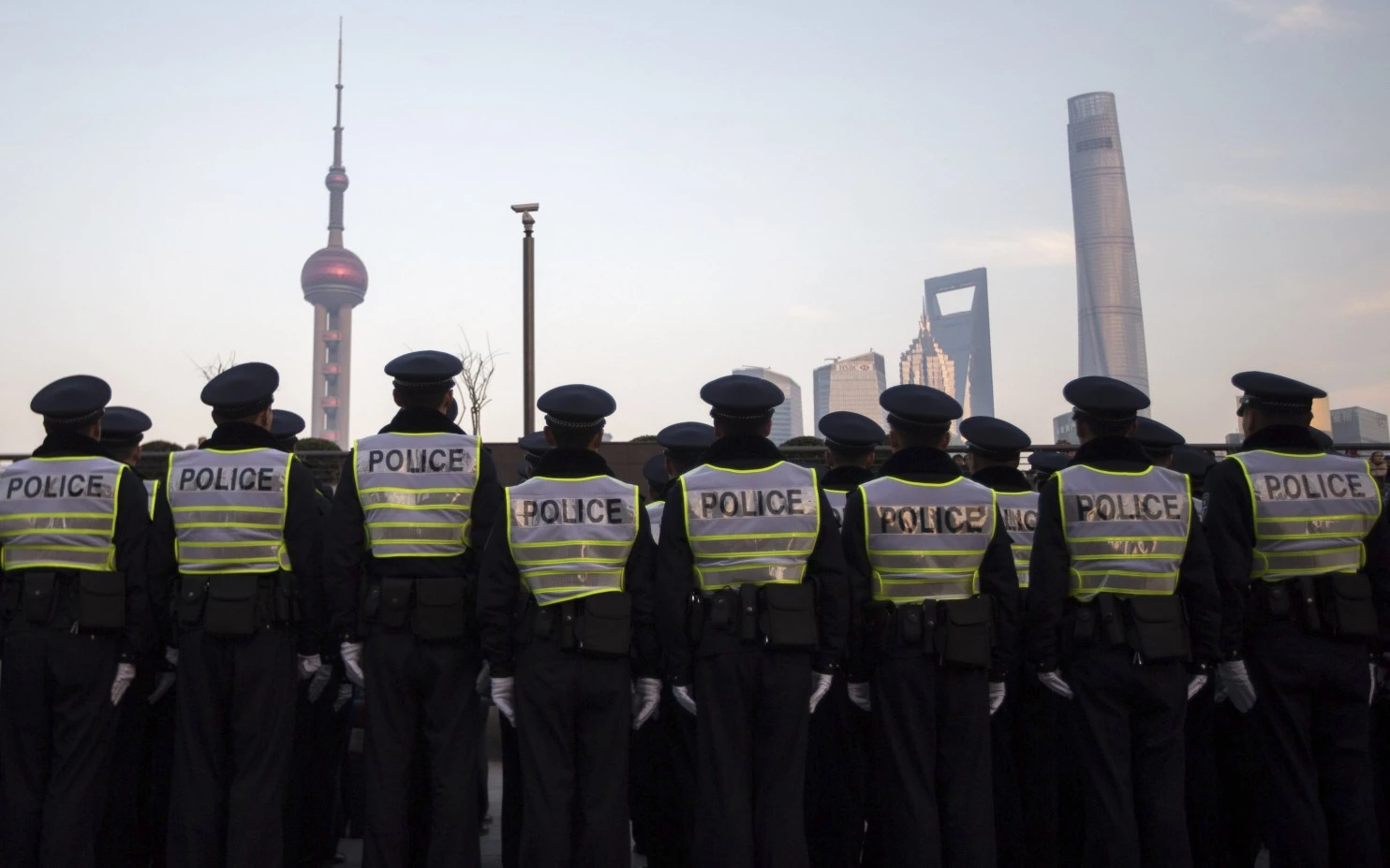 Policemen stand in formation as they guard on the bund where people were killed in a stampede incident during a new year’s celebration, in Shanghai, on Jan. 3. Chinese state media and the public criticised the government and police on Friday for failing to prevent the stampede in Shanghai that killed
China harassing and imprisoning Chinese working for foreign news outlets已关闭评论
Posted in unclassified
Tagged Democracy, Hong Kong, Occupy Central movement, Press Freedom, Zhang Miao
By David Bandurski | Posted on 2015-01-23
In September last year, as China saw a series of media scandals, we ran several articles addressing the phenomenon of media corruption. We refer readers back to Continue reading
China leads the world in media corruption, says expert已关闭评论
Posted in Press Freedom
Tagged Press Freedom, Zhan Jiang
Published: January 20, 2015
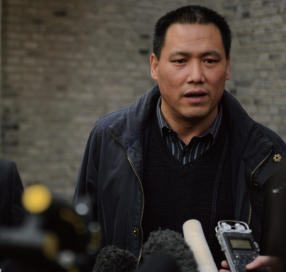
PU ZHIQIANG (浦志强). PHOTO FROM ONLINE.
On January 11, the Chinese human rights lawyer Pu Zhiqiang (浦志强) spent his fiftieth birthday behind bars. No one knows what was going through the mind of this famous and very vocal lawyer Continue reading
Chang Ping:The Looming Shadow of the Case against Pu Zhiqiang已关闭评论
Posted in Headlines, June 4th Commemoration, Writers in Prison
Tagged Internet Freedom, June 4th, Pu Zhiqiang
Published: January 18, 2015
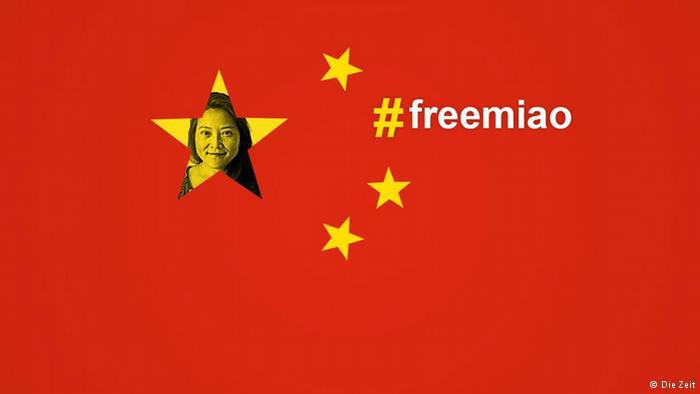 Zhang Miao
Three months after friend and assistant Zhang Miao (張淼) was arrested, Continue reading
Chang Ping:Zhang Miao Receives “Treatment Reserved for Chinese Citizens”已关闭评论
Posted in Headlines, Press Freedom, Writers in Prison
Tagged Zhang Miao